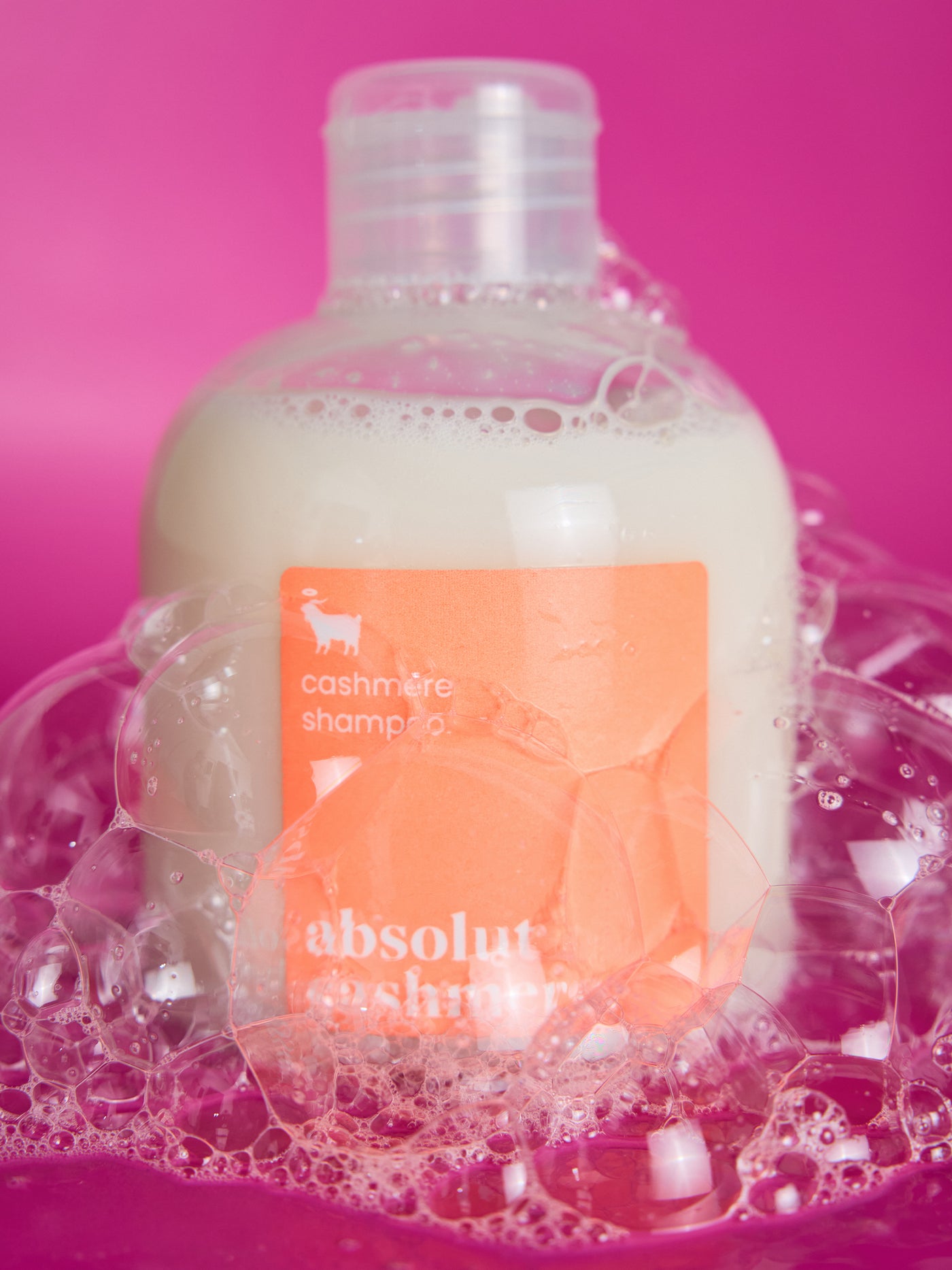
How to care for your cashmere garments?
At Absolut Cashmere, every garment is designed to last: modern, confident cuts, around thirty pop and vivid colours, and quality cashmere that deserves to be looked after.
Caring for cashmere is simpler than it seems. Follow the guide, and your favourite pieces will feel just as soft as the day you first wore them.

How to wash your cashmere garments properly?
Contrary to popular belief, cashmere loves water. Regular washing, every 3 to 4 wears, keeps the fibre in good condition and limits pilling on new pieces. There is no need to wait for a stain to set or an odour to develop: washing your cashmere regularly is the best way to care for it.
Hand washing your cashmere
This is the method we recommend for preserving the suppleness of the knit over the long term.
1. Fill a clean sink or basin with lukewarm water — never hot (20 to 30°C maximum).
2. Add a gentle detergent, specially formulated for wool or cashmere, and allow it to dissolve.
3. Turn your garment inside out, submerge it and gently press the fabric with your fingertips, never rubbing, twisting or pulling at the knit.
4. Rinse thoroughly in clean water at the same temperature, until all traces of detergent have disappeared.
Machine washing your cashmere
If you prefer the machine, your cashmere pieces won't hold it against you — as long as you follow a few simple rules:
- Place the garment inside out in a laundry bag to protect it from drum friction.
- Select a cold or wool programme, 20 to 30°C maximum.
- Avoid spinning, or set the spin speed to a minimum to avoid distorting the knit.
A few things to avoid
Some everyday habits damage cashmere faster than you might think. Avoid fabric conditioner and detergents containing bleaching agents or enzymes: they dull the colour and cause the fibre to felt. Hot water should also be avoided, as it can cause shrinkage or colour bleed — particularly with the most vibrant shades in our collections.
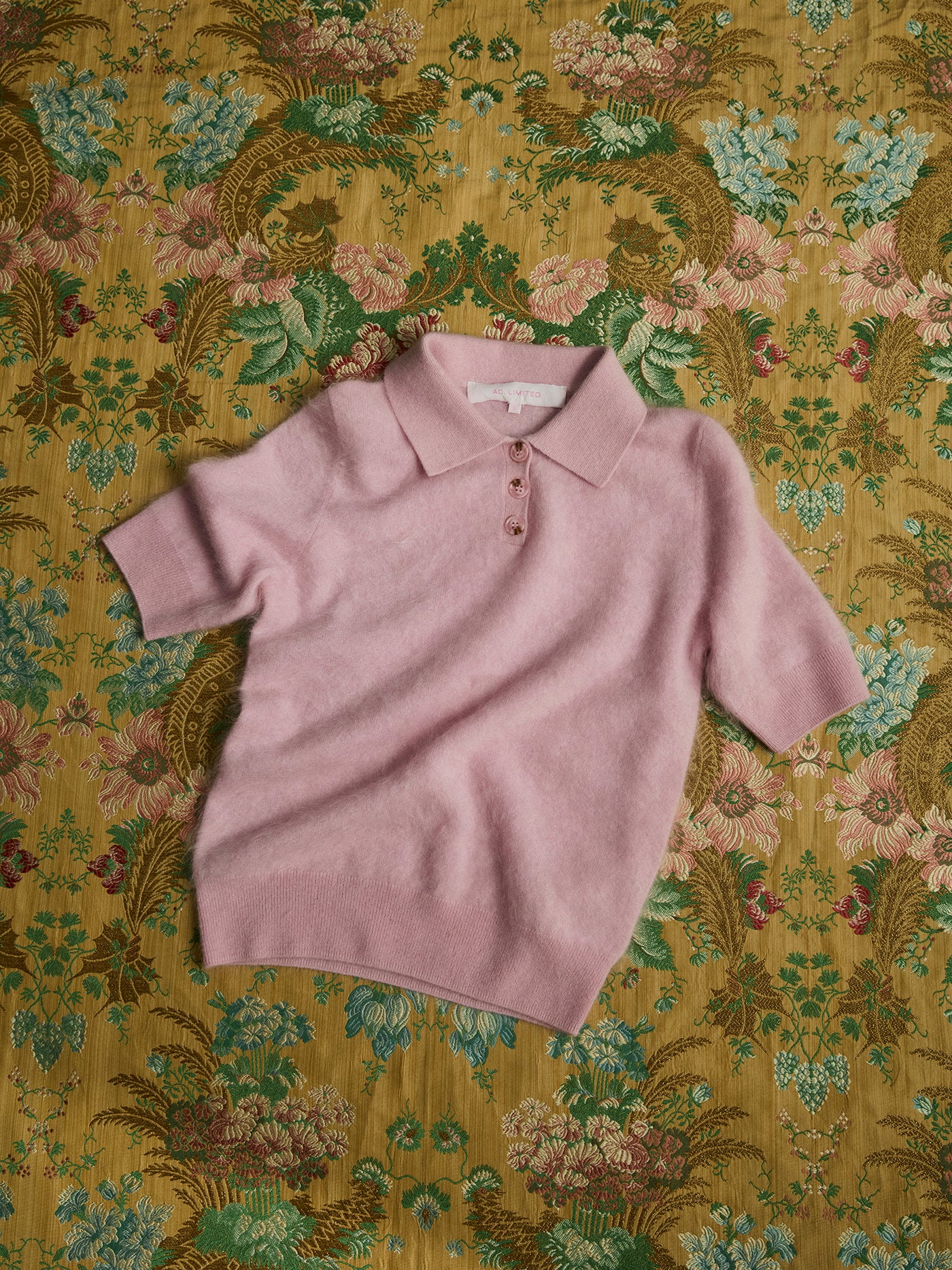
How to dry and iron a cashmere garment?
Drying is often the step where beautiful cashmere loses its shape. A few simple precautions are enough to avoid any unpleasant surprises.
Drying flat — the step you should never skip
Once washed, lay your garment on a clean towel and gently roll it up to absorb the excess water, without wringing or squeezing by hand. Unroll it, reshape it, then leave it to dry flat on a dry towel, away from sunlight and any heat source. No radiator, no tumble dryer: direct heat is cashmere's number one enemy.
Can cashmere garments be ironed?
Yes, cashmere can be ironed, as long as you take care. Turn your garment inside out and use a low heat setting with steam, or place a damp pressing cloth between the iron and the fabric to avoid any direct contact. This simple step restores a perfect drape before you wear your favourite piece, without ever putting the fibre under stress.
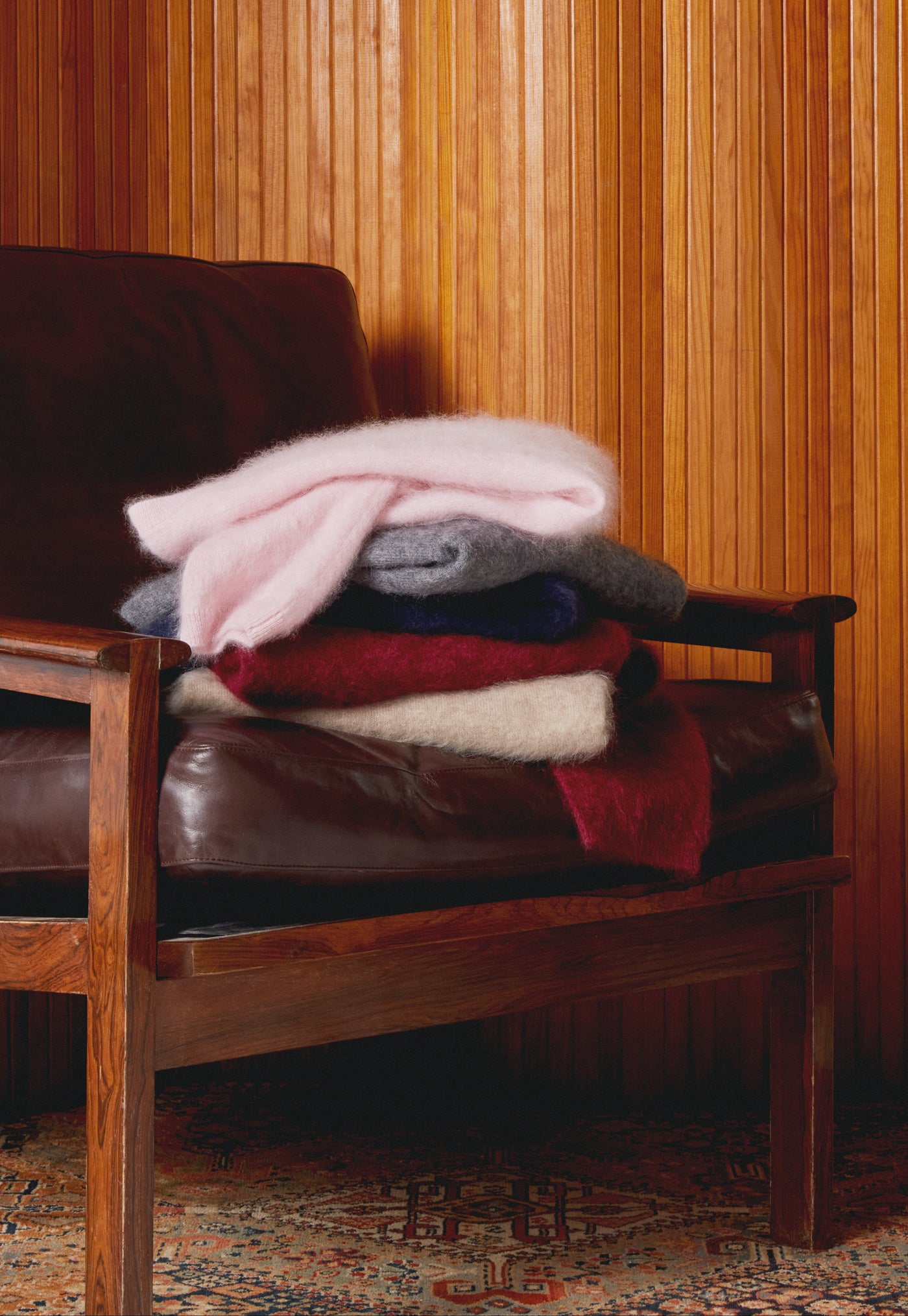
How to wash and dry your brushed cashmere garments?
The brushed cashmere calls for a little extra care, different from that of a classic cashmere. Its fluffy, cloud-like texture — achieved through a surface treatment that lifts and volumises the fibres — makes it more sensitive to felting and friction.
Always opt for hand washing in cold water with a gentle specialist wool detergent, avoiding all wringing, twisting and hanging of the garment.
Drying flat is essential, away from heat and light, to preserve that characteristic volume without flattening it. A light brush, once a season, is enough to revive the fibre's body and maintain its velvety feel. Use a soft brush specifically designed for cashmere, or simply your hand, taking care not to be too rough with the fabric.
As with all cashmere, storing folded rather than hung, away from moths, will keep it beautiful season after season.
How to prevent and remove pilling on cashmere?
The small pills that appear on a cashmere jumper are not a manufacturing defect — quite the opposite: they are a sign of a natural, living material releasing its surplus fibres through friction. This is a normal phenomenon, especially in the early days, and it gradually fades with washing.
A few simple habits are enough to keep them at bay:
- Follow our washing advice to protect the fibre over time.
- Avoid wearing your cashmere under garments with areas of significant friction (shoulder straps, belts, clasp pockets).
- Add a splash of white vinegar to the rinse water to soften the fibre.
If pilling does appear, use a cashmere comb or fabric shaver with light, circular strokes, following the direction of the knit. Never pull them off by hand — you risk creating a hole. Our care kit brings together everything you need for this simple routine, to be repeated season after season.

How to remove a stain from a cashmere jumper?
A stain on your favourite cashmere is not the end of the world, as long as you act quickly.
1. Immediately blot the excess liquid with a clean cloth — without rubbing — to prevent the stain from setting into the fibre.
2. Apply a specialist wool detergent or a stain remover designed for cashmere directly to the affected area.
3. Leave it to work for a few minutes, then proceed with the usual wash, by hand or in the machine, following our advice above.
For greasy or coloured stains (wine, sauce, make-up), the approach is the same: dab without ever rubbing, always working from the outside towards the centre of the stain to avoid spreading it. If it still won't budge, it is better to entrust your garment to a specialist dry cleaner rather than making repeated attempts, which could weaken the fibre.
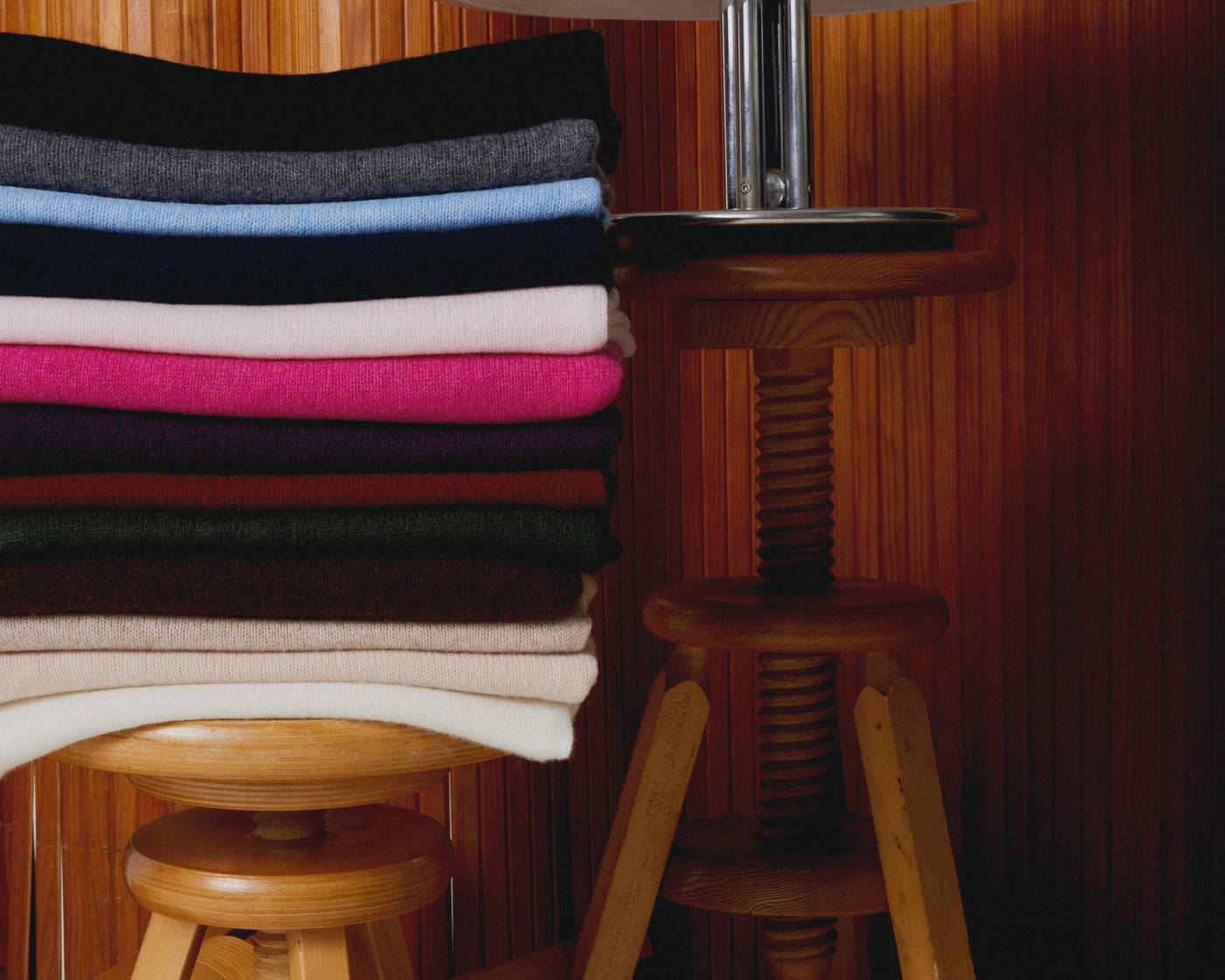
How to store cashmere garments to keep them in perfect condition?
Storage is a step that is too often overlooked, yet it determines how well your pieces hold their shape over time.
- Always fold your cashmere garments rather than hanging them on a hanger, which distorts the shoulders and stretches the knit.
- Store them in a garment bag or a drawer, away from light, in a dry and well-ventilated place.
- Tuck a few cedar or lavender balls into your drawers or garment bags: they are effective natural moth repellents that protect the fibre while releasing a pleasant scent.
Careful care, for cashmere that stands the test of time
A cashmere garment reveals its true character over time — attentive care preserves its softness, its shape and its lustre, wash after wash. A little attention that extends its beauty and invites you to rediscover your wardrobe essentials, season after season.
Frequently asked questions about cashmere care
Can cashmere be machine washed?
Yes, as long as you place it in a laundry bag, select a cold or wool programme at a maximum of 20–30°C, and reduce or eliminate the spin cycle. Hand washing remains the gentlest method for preserving the fibre in the long term.
Does cashmere shrink in the wash?
Cashmere can shrink if washed in hot water or tumble dried. By keeping to a maximum temperature of 20–30°C and drying flat, this risk is avoided.
Why is my cashmere jumper pilling?
Pilling is a natural phenomenon caused by fibres rubbing against each other. It is more common on new pieces and fades with washing. A cashmere comb or fabric shaver makes it easy to remove the pills without damaging the knit.
How do you remove a set-in stain from cashmere?
A set-in stain is harder to treat than a fresh one. Rehydrate it by gently dabbing with a damp cloth, then apply a specialist wool detergent before washing the garment as normal. If the stain persists, a specialist dry cleaner remains the safest option.
Should cashmere be washed often?
Washing every 3 to 4 wears is ideal. Contrary to popular belief, spacing out washes does not help preserve the fibre — cashmere actually needs regular contact with water to stay soft and supple.
How do you protect cashmere from moths?
Store your garments folded, in a garment bag or a closed drawer, and tuck in some cedar balls or lavender sachets. These natural moth repellents keep insects away without exposing the fibre to harsh chemicals.
Can cashmere be dry cleaned?
Yes, dry cleaning is an option, particularly for stubborn stains that resist a regular wash. It should, however, be reserved for difficult cases: a regular, gentle hand wash is sufficient in the vast majority of situations.